L. R. Burleigh Jr.: Lithographer of Bird’s-Eye Views
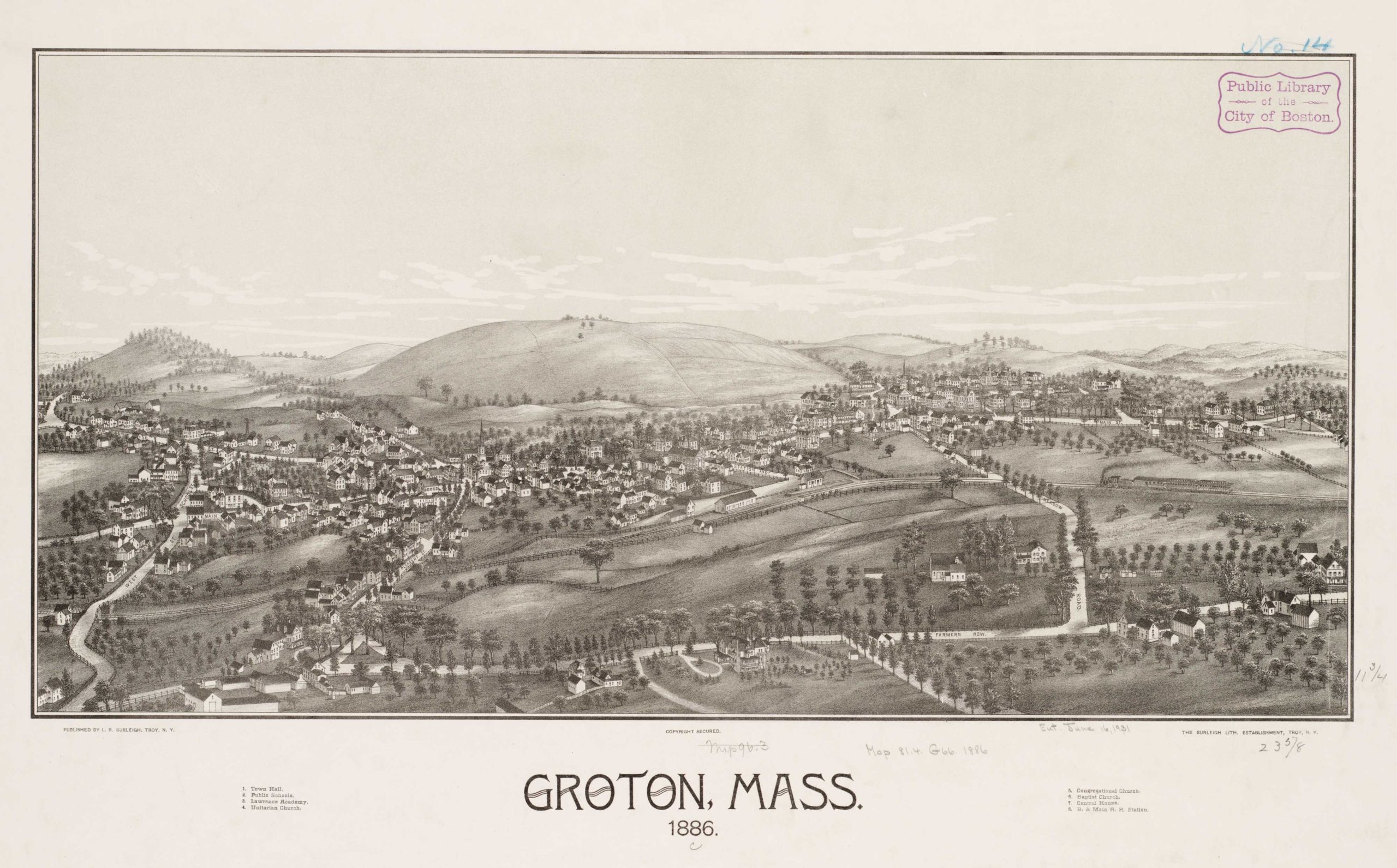
Lucien R. Burleigh, son and namesake of the abolitionist minister Lucien R. Burleigh, pursued a markedly different career from his father, joining his cousins Charles C. Burleigh and Sydney Burleigh in the visual arts. He became one of the foremost American lithographers of the late nineteenth and early twentieth centuries, renowned for his meticulously detailed, accurately rendered bird’s-eye views of cities and towns. Based in the Albany–Troy–Schenectady region of New York, Burleigh produced an extensive body of work that remains among the finest examples of the genre. Many of his panoramic views have since been digitized and are widely available online.
According to John W. Reps in *Views and Viewmakers of Urban America: Lithographs of Towns and Cities in the United States and Canada*, Burleigh earned a degree in civil engineering from the Worcester County Free Institute of Industrial Science (now Worcester Polytechnic Institute) in 1875. Although trained as an engineer, Reps suggests that the economic depression of the mid-1870s may have limited professional opportunities, prompting Burleigh to pursue lithography instead. He relocated to Milwaukee in 1875, where he worked for an unidentified lithographic firm producing pencil sketches of towns and small cities for transfer to lithographic stone. After returning to Plainfield in 1878, he taught school until the spring of 1879.
Burleigh began his professional career as a lithographer that summer with the H. H. Rowley Company of Hartford, Connecticut. He published his first bird’s-eye view in 1882 and, that same year, began drawing for D. Mason & Co. of Syracuse, New York. In 1886, he established his own lithographic firm in Troy, New York, from which he produced the majority of his celebrated city views.
The preparation of panoramic views required extensive travel, and Burleigh surveyed communities across Connecticut, Massachusetts, New Hampshire, New York, Pennsylvania, and Vermont. His seventy-nine known views of New York communities alone attest to the scope of his fieldwork. Reps estimates that Burleigh ceased producing his own drawings around 1890, perhaps due to the demands of constant travel. His lithographic business, however, continued well into the twentieth century, gradually shifting its focus from bird’s-eye views to commercial printing, including stationery, bonds, and stock certificates. Even after retiring as a field artist, Burleigh continued printing panoramic views drawn by other artists, notably George Norris and Christian Fausel.